Before any building goes up, important work happens at ground level. Site clearance and groundworks are the first stages of any construction project. They prepare the land so everything built on top will be safe and stable.
Getting these early steps right sets the stage for success. Without proper site clearance, buildings can develop serious problems like cracked foundations or poor drainage.
What Is Site Clearance?
Site clearance involves removing anything that would get in the way of building work. This includes removing tree roots, vegetation, old structures, rubble, and debris.
This stage creates a blank canvas for the construction site. It also helps identify issues that might affect the build, such as buried waste or unstable ground.
What Are Groundworks?
Groundworks and site preparation cover all work done below ground level. This includes preparing the soil, digging foundations, installing drainage, and laying utility connections.
Think of groundworks as the hidden support system for everything above. Without them, a building could sink, shift, or flood.
Key Steps in the Process
Here’s a breakdown of the main stages:
| Step | What Happens | Why It Matters |
|---|---|---|
| Ground investigation | Soil testing and mapping underground services | Avoids surprises during digging |
| Site clearance | Removing vegetation, debris, and old structures | Creates safe working space |
| Setting out | Marking where everything will go | Ensures correct positioning |
| Excavation | Digging trenches for foundations | Creates space for the base |
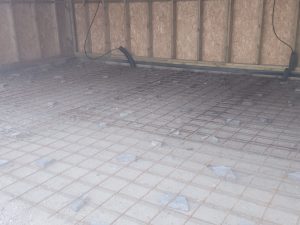
| Foundation laying | Pouring concrete for a solid foundation | Supports the building’s weight |
| Drainage installation | Fitting pipes to manage water | Prevents flooding |
| Utility connections | Laying pipes and cables | Brings essential services |
Ground Investigation
Every construction project starts with understanding what’s below the surface. Soil testing checks the ground conditions, while surveys identify underground services like gas pipes or electricity cables.
The Health and Safety Executive provides detailed guidance on excavation safety, including how to spot hazards before digging begins. This helps ensure compliance with UK safety regulations.
Site Clearance
Once surveys are complete, clearance begins. This involves removing tree stumps, overgrown bushes, old sheds, or tonnes of rubble.
Waste materials are sorted and disposed of responsibly. Many items can be recycled, including metal, concrete, and wood.
Excavation and Foundations
Excavation means digging out the ground to create space for foundations. The depth depends on the building design and soil conditions.
A solid foundation is essential for any structure. For houses and smaller buildings, strip foundations are common. Larger structures might need deeper-piled foundations.
Drainage and Utilities
Proper drainage stops water from collecting where it shouldn’t. Pipes are laid at careful angles so water flows away naturally.
Before construction activities continue, basic services need to be connected. This means laying pipes for water and gas, plus cables for electricity.
Why Proper Preparation Matters
Skipping any stage of the construction process can cause serious problems. Poor site clearance might mean building over buried waste. Bad drainage causes flooding. Weak foundations make buildings unsafe.
Taking time to do groundworks properly saves money and trouble later. Foundation problems are expensive to fix once a building is finished.
Choosing the Right Team
Site clearance and groundworks need experienced teams with the right equipment. Look for contractors who understand the full process and follow safety regulations.
Good groundworks might be invisible once a building is complete, but they make the difference between a structure that lasts decades and one that develops problems from day one.